

If you’ve been managing Type 2 diabetes for a decade or more, your body has been quietly absorbing damage that most men don’t think about until something stops working. ED is one of the most common complications of long-term T2D, and it’s also one of the hardest to talk about openly.
Here’s what you should know: the relationship between Type 2 diabetes and ED is well-documented. Standard pills work well for a lot of men early on, but they depend on systems that T2D gradually wears down.
The same pill that worked at year three may barely register at year 12. That’s not a failure on your part. That’s your body changing, and it’s worth understanding why so you can make informed decisions about what comes next.
The T2D–ED Connection
This is far more common than most men realize. A large-scale meta-analysis published in Diabetic Medicine found that about 66.3% of men with Type 2 diabetes develop erectile dysfunction, across 145 studies and nearly 90,000 men. That rate is roughly 75% higher than what’s seen in men with Type 1 diabetes. T2D does a particular kind of harm that other conditions don’t.
Two Problems, Not One
Your body needs two things working together to get and maintain an erection: healthy vessels that deliver circulation, and intact nerves that carry the arousal signal from your brain. Type 2 diabetes chips away at both, and that’s what makes this so stubborn to treat.
Vascular deterioration: Years of elevated blood sugar gradually narrow and stiffen the small vessels that supply the penis. Over time, they lose their ability to open up on demand. Less circulation when it counts, or none at all.
Nerve impairment: The nerves responsible for triggering and sustaining an erection are part of the wiring that runs automatically in the background. As a 2025 review in Endocrinology, Diabetes & Metabolism confirms, diabetes-related nerve deterioration directly interferes with the physical process of getting and keeping an erection.
There’s one more thing worth flagging. A March 2026 review in Frontiers in Clinical Diabetes and Healthcare found that ED in men with T2D often signals broader cardiovascular problems. The same vascular wear showing up in penile arteries is frequently happening elsewhere in your body.
Type 2 diabetes and ED prove harder to treat than ED in otherwise healthy men because both systems are compromised.
When Your ED Pill Stops Delivering
If your current pill isn’t doing what it used to, you’re not imagining it. Sildenafil and tadalafil belong to a class called PDE5 inhibitors. They work by amplifying your body’s response to nitric oxide, helping vessels stay relaxed longer so circulation can do its job. For most men, they work well.
The catch is that they depend on your vasculature and nerves being in reasonable shape. The longer you’ve had T2D, the more that foundation has eroded, and there’s a real clinical pattern behind it.
The Role of Diabetes Duration
A 2025 study in Cureus looked at men with Type 2 diabetes whose standard ED medication had stopped delivering consistent results, and the findings were telling. How long you’ve had diabetes turned out to be one of the strongest predictors of needing a more involved approach.
Men who needed a step up had been living with T2D for an average of 11 years. Those still responding well averaged eight years.
That shift tends to be gradual, which is part of why it catches men off guard. Your pill didn’t suddenly stop working. Your body slowly moved past what it can do.
Why the Standard Pill Loses Ground
During arousal, your body releases nitric oxide, which signals your vessels to relax and let blood flow in. Standard ED pills work by keeping that response active longer. Pretty straightforward when everything is intact.
But Type 2 diabetes damages the nerves that release nitric oxide in the first place, and it wears down the vessel lining that responds to it. So the medication is trying to amplify a signal that’s been weakened at the source, arriving at tissue that’s less responsive. Over time, that gap just widens.
What Doctors Are Recommending Instead

When Type 2 diabetes and ED outlast a standard prescription, the clinical conversation shifts to combination approaches. The same 2025 Cureus study examined dual PDE5 inhibitor therapy, pairing a daily low-dose medication with an on-demand dose, for men with T2D who weren’t responding to a single treatment.
The thinking: one medication taken daily keeps your vessels in better shape day to day, while the second kicks in when you need it.
A Multi-Mechanism Alternative

Rugiet Ready®
If you’re in this situation, Rugiet Ready® is worth a closer look. It’s a compounded treatment designed to address both the vascular and the neurological sides of what diabetic ED disrupts. No clinical trial has tested Ready™ specifically in men with T2D, but the formulation aligns with the direction the research is heading. Here’s what’s in it and why each piece matters.
Sildenafil + Tadalafil (Dual PDE5 Inhibition)
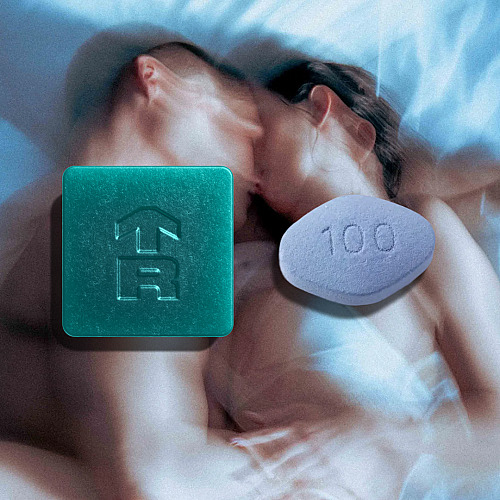
Ready combines a fast-acting ingredient (sildenafil) with a longer-acting one (tadalafil) in a single dose. That’s the same dual approach researchers are actively exploring for diabetic non-responders, without the hassle of two separate prescriptions or dosing schedules.
Apomorphine (A Different Pathway)
This is the ingredient that makes the combination interesting from a clinical standpoint. Apomorphine works in the brain, not the vessels. It activates dopamine receptors involved in sexual arousal, helping generate the signal that starts the whole process. If your nerve pathways have taken a hit from diabetes, a treatment that works through a different route adds something PDE5 inhibitors alone can’t provide.
Apomorphine has been studied for over 20 years. Combined with sildenafil and tadalafil, it rounds out the picture in a way that circulation support alone doesn’t.
Sublingual Delivery and Physician-Customized Dosing
Ready dissolves under the tongue and absorbs directly into your bloodstream, skipping the digestive system entirely. That means you’re ready in ~15 minutes* rather than the 30–60+ minutes a swallowed pill typically takes.
Every Rugiet Ready prescription is written by a physician who reviews your health history, your diabetes duration, and your current medications before setting the dose. If the formula needs adjusting over time, your physician makes those changes.
You’re not locked into a one-size-fits-all prescription.
What to Know Before You Start

Before you decide, a few things to keep in mind:
Keep managing your diabetes with your regular doctor. Blood sugar control is the foundation everything else builds on. Rugiet Ready works alongside that care, not instead of it.
Ready™ hasn’t been studied in T2D-specific clinical trials. The case for its approach is based on mechanism and related research, not a trial conducted in diabetic men using Ready™ specifically.
A prescription is required. A Rugiet® physician reviews your health profile before writing any prescription. Not everyone qualifies, and the dose is tailored to your needs.
Pricing starts at $7.29 per dose on a quarterly plan. Ready™ ships directly to your door in discreet packaging. HSA and FSA funds are eligible for reimbursement.
If you’ve been living with Type 2 diabetes and ED treatment has lost ground over the years, this is a conversation worth having with a physician who understands the full picture. The assessment takes about five minutes.
See if Ready™ is right for you.
*15 minutes on average, after medication dissolves. Based on an internal survey of Rugiet Ready® customers. Customer results have not been independently verified. Individual results may vary.
This article is informational only and not a substitute for medical advice, diagnosis, or treatment; consult your healthcare provider about diabetes management and before starting any new treatment. Actual product may differ from image shown. All details verified at publication and subject to change.
Rugiet Ready is a compounded drug product, prescribed only after an online consultation with a Rugiet® provider. Compounded products are permitted to be prescribed under federal law but are not FDA-approved and do not undergo FDA safety, effectiveness, or manufacturing review. Individual results may vary. Offered as part of a recurring subscription; additional terms apply. Rugiet Ready complements traditional medical care; it does not replace it. Visit rugiet.com for details and important safety information.






Leave a Comment
Your email address will not be published. Required fields are marked *